Why a Basketball Screen Creates a Split-Second Choice
A basketball screen creates a split-second choice for the defense; learn to read the switch, stay attached, or open lane and passing options.
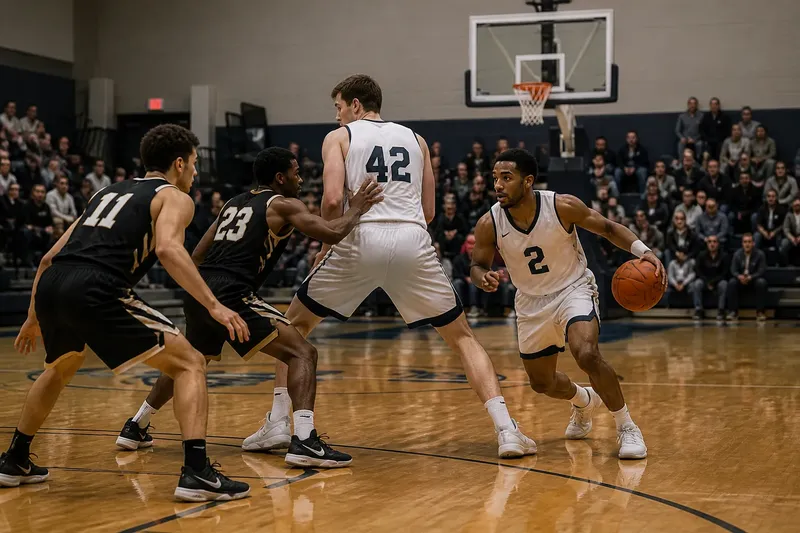
The most common mistake in reading a basketball screen is watching only the ball. That misses the defender’s split-second choice: follow the ball handler around the screen, or account for the player who set it. A basketball screen creates a split-second choice because two offensive players briefly occupy the same decision point, and each defensive response opens a different route.
To see the tactic clearly, watch the two defenders involved before you follow the shot. One is guarding the ball handler; the other is guarding the screener. Their spacing, signals, and movement tell you what the offense might gain—even if the screen never leads directly to a basket.
What does the screen make the defenders decide?
A screen, also called a pick, is a legal attempt to impede a defender’s path by a player who establishes a stationary position. The ball handler approaches that position closely, making the defender choose how to get through or around it. Meanwhile, the screener’s defender must decide whether to help, exchange assignments, or remain with the screener.
These decisions happen together. If the on-ball defender trails behind, the ball handler may have room to turn the corner. If the second defender steps toward the ball, the screener can move into the space that defender leaves. If neither helps enough, the ball handler may have an open shot or driving lane.
Think of two people trying to pass through a doorway while carrying a box: one person’s movement changes the space available to the other. A screen works on a court, not in a doorway, but its effect is similar. The defense has to account for two moving threats in a compressed moment.
How can you read the screen before it happens?
Start with the screener’s approach. A player who moves into a defender’s route and sets their feet is preparing to create contact or a close obstacle. Notice which side the screener occupies and whether the ball handler is moving toward that side. The action is most legible when you can see both players and both defenders at once.
Then look for the ball handler’s pace. A hard approach can force the defender to commit to getting over or under the screen. A slower approach may invite the screener’s defender to step out and contain the ball. Neither choice is automatically wrong; the right response depends on the matchup, teammates’ positions, and the team’s defensive plan.
Watch the screener’s feet and torso, too. A screen that arrives late, drifts into the defender, or fails to leave room for the ball handler may not create a useful advantage. A legal screen requires the screener to establish position rather than illegally moving into an opponent. For a particular call, the applicable league rules and referee’s judgment determine how the contact is assessed.
What are the defense’s main responses?
There is no single answer to a screen. The defense can choose among several approaches, and its players may adjust their response during the action.
- Go over: The on-ball defender takes a path around the screener’s outside shoulder to stay close to the ball handler. This can limit an open pull-up shot, though the defender may briefly fall behind.
- Go under: The defender slips beneath the screen and reconnects with the ball handler. This can help against a player who is less threatening as a long-range shooter, but may leave room to shoot.
- Switch: The two defenders exchange assignments. The new ball defender takes the handler, while the original defender tracks the screener. The exchange can stop immediate penetration but may create a mismatch in size or speed.
- Show or hedge: The screener’s defender steps toward the ball handler to slow the drive while the original defender recovers. The timing matters: too little pressure gives the handler space, while too much can leave the screener free.
- Trap: Both defenders pressure the ball handler together. This can force a pass, but it also leaves an offensive player temporarily guarded by fewer defenders elsewhere.
For a viewer, the useful question is not simply, “Which defense is best?” Ask instead, “What did this response concede?” Going under may concede a shot; switching may concede a mismatch; trapping may concede a passing lane. The attack is trying to make that concession costly.
How does the offense use the choice?
The ball handler can turn the corner, stop for a jump shot, or pass to the screener if the screener rolls toward the basket. A screener who moves away from the basket to receive a pass is often described as popping. The appropriate option depends on how the defense reacts and where the other three offensive players are stationed.
A simple invented situation makes the timing clearer. Imagine a guard dribbling on the right side while a center sets a stationary screen near the top of the key. If the guard’s defender goes over and the center’s defender steps toward the ball, the guard can pass to the center rolling toward the basket; the expected visible result is that the center receives the ball in space, though another defender may rotate to challenge. If the center’s defender stays back, the guard may instead turn the corner into the open lane.
The screen can also create an advantage without a direct pass or shot. A defender drawn toward the ball may leave a teammate open on the weak side, the side away from the ball. The handler can swing a pass across the court, or the offense can use the first movement to set up another screen. Read the next defender’s position before deciding that the initial action has ended.
What should you look for on your next watch?
Use one possession as a small viewing exercise. Keep your eyes on the screen and the two defenders involved until the defense settles, then trace where the ball goes. You do not need to identify every play call; simply note the choice and the space it gives up.
- Before the screen: Identify the ball handler’s defender and the screener’s defender.
- At contact: See whether the on-ball defender goes over, under, or exchanges assignments.
- At the second defender: Check whether they stay back, step toward the ball, or join a trap.
- At the opening: Look for a driving lane, a shot, a rolling screener, or a teammate freed on the far side.
- After the pass or drive: Notice whether another defender rotates to cover the opening and what space that rotation leaves behind.
If the action happens too quickly, follow just one defender on the next possession. Watching the screener’s defender often makes the read easier because that player’s movement reveals whether the defense is protecting the basket, challenging the handler, or trading assignments.
Which screen details do viewers often ask about?
Why does the ball handler sometimes reject the screen?
The handler can move away from the screen if the defender has committed to protecting that route. That change of direction may create a lane on the opposite side or catch the defense shifting together.
Why does the screener roll toward the basket?
After setting the screen, the player may turn and move toward the hoop to occupy the defender who stepped toward the ball. A pass can reach the roller if the defense does not recover in time.
Why do defenders switch instead of fighting through?
Switching lets the defenders stay connected to the two immediate threats without chasing around the screen. It can be a sensible team choice, though the offense may then try to exploit a mismatch.
Can a screen create an advantage even if the ball handler keeps dribbling?
Yes. The defenders may have to shift, and that movement can open space for a later pass or another action. Watch how the defense reorganizes after the screen rather than judging the play only by its first touch.
What is the most useful way to read the moment?
When a basketball screen creates a split-second choice, track the defender who has to decide first and the teammate who may benefit from that decision. The ball handler’s path matters, but so does the screener’s next movement and the help defender’s location. With that wider view, a screen looks less like a collision and more like a question the offense is asking: which threat will the defense leave open?
On your next watch, wait until the defenders reveal their answer before following the ball. That brief pause often shows why a quiet screen can reshape the whole possession, even when the player who set it never touches the ball again.