The Goalkeeper Is Not Simply a Spare Defender
Understand the goalkeeper role beyond shot-stopping: see how positioning, communication, and distribution shape the space a soccer team can defend.
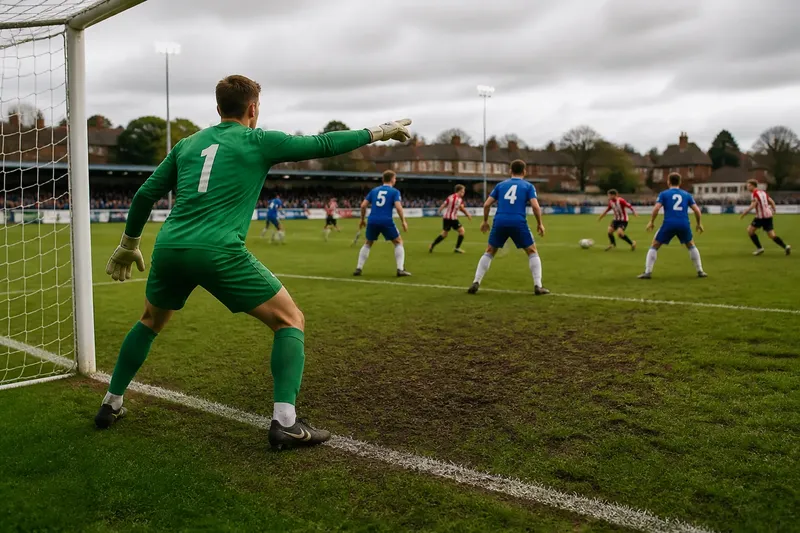
The most common mistake in understanding the goalkeeper role is to focus only on saves. That misses the keeper’s view of developing attacks, the space behind the defensive line, and the brief instructions that can help teammates react.
What does a goalkeeper do besides stop shots?
A goalkeeper reads danger before a shot is taken. They track the ball, nearby attackers, and defenders, then adjust their position and decide what information teammates need. Their work can include dealing with crosses, covering space behind the defense, and helping the team begin an attack.
Those duties connect, but they are not simply variations of defending. An outfield defender may close a particular route or respond to an opponent nearby. The goalkeeper has a broader view and can adjust in relation to several threats at once.
How does goalkeeper positioning change the space attackers see?
Positioning affects which parts of the goal and penalty area appear available to an attacker. In association football, the keeper can use their hands only within their own penalty area, subject to the applicable competition rules. A keeper standing close to the goal line may have more time to react to a shot but leave an attacker a wider apparent target from an angle. Moving forward can narrow that view, but it also leaves more space behind the keeper if the ball is played over them.
The right position depends on the ball’s location, the likely next action, and the keeper’s ability to recover. It is not a matter of standing as far forward as possible. If the ball is near the touchline, the keeper may shift toward that side; if it moves centrally, they may reset to cover both sides more evenly.
Say a defender is tracking an attacker near the edge of the penalty area while another opponent waits for a pass behind the line. The goalkeeper moves a little farther from goal to shorten the route to that pass, while staying balanced enough to retreat if the attacker shoots. The observable tradeoff is a better chance to intercept the pass in exchange for less time to get back if the shot goes over the keeper.
Think of the position like a doorstop: it changes how much room a moving object has, but it does not decide where the object will go. The attacker still chooses, and the keeper still has to respond.
Why does the goalkeeper talk so much?
The goalkeeper can often see a developing play from a different angle than defenders facing the ball. Short, timely instructions can help a teammate track a runner, hold a line, or leave a ball for the keeper to collect. Communication is useful when it gives a teammate a clear action, not when it becomes a stream of noise.
Good calls tend to be specific and early enough to act on: a name, a direction, or a simple command such as “hold” or “keeper.” The exact wording varies by team. What matters is that players recognize the call and know what response it asks for.
Communication also runs the other way. A defender may alert the keeper that an opponent is approaching from a side the keeper cannot see. It is not a one-way command post; teammates share information so the group can make a coordinated decision.
When should a goalkeeper leave the goal line?
A goalkeeper may come forward to claim a cross, meet a through ball, or reduce an attacker’s time and space. Staying back can be wiser when the ball is controlled near goal, the keeper is unlikely to reach it first, or moving forward would expose an open route behind them.
These choices depend on timing and confidence in the next action. Coming out decisively can prevent an opponent from getting a clean touch. Hesitating halfway may leave the keeper too far from goal to protect the net and too far from the ball to claim it.
In association football, the keeper’s permission to handle the ball is limited to their own penalty area under the Laws of the Game, with details and competition application governed by the relevant rules. Outside that area, they may play the ball with their feet like other players, but they must not handle it. A keeper or coach should check the rulebook for the competition they are playing in rather than assume every game applies identical provisions.
How does a goalkeeper help start an attack?
After gaining possession, the keeper can choose a short pass to a nearby defender, a throw to a teammate in space, or a longer delivery toward an advanced player. The best choice depends on the opposition’s shape and whether a teammate can receive the ball safely.
A short pass may help a team keep possession and draw opponents toward one side. A longer ball can bypass pressure, but it may also give the opposition a chance to regain the ball. The keeper’s contribution is to notice the available options and deliver the ball in a way that fits the team’s next move.
This does not make the keeper an outfield playmaker in the usual sense. Their decisions begin from a different position, often with a broad view of the field but limited time before opponents close down a receiver. A simple, accurate choice can be more useful than an ambitious pass.
What do readers often ask about the goalkeeper role?
Can a goalkeeper move anywhere on the field?
A goalkeeper can move beyond the penalty area, but in association football they cannot handle the ball there. Their team may use them higher up when building possession, though they remain responsible for recovering toward goal if possession is lost.
Why does a goalkeeper stand off the goal line?
Standing off the line can let a keeper intercept a pass or narrow the apparent shooting angle. The position must still leave a reasonable chance to recover if an attacker tries a shot over or around them.
What does “claim the cross” mean?
It means the goalkeeper comes to the ball and catches or otherwise controls it before an opponent can make a dangerous play. If the keeper cannot reach it confidently, staying in position may be the safer choice.
Is the goalkeeper responsible for organizing the defense?
The keeper often gives instructions because they can see much of the play, but defensive organization is shared across the team. A clear call helps only if teammates understand it and act together.
How can you read a goalkeeper’s decisions during a match?
Watch the keeper before the ball reaches the penalty area. Notice whether they adjust as the ball changes sides, look over a shoulder to check runners, or call to defenders as an opponent moves into a gap. These small actions can reveal how the keeper anticipates danger rather than waiting for a shot.
Then watch what happens after possession changes. Does the keeper come forward to cover space, retreat to protect the goal, or pause because the next pass is uncertain? If a teammate receives the ball, see whether the keeper offers a passing option and how quickly they return to a defensive position when the opponent wins possession.
The goalkeeper role is easier to read when you follow the space the keeper manages, not only the saves they make. Positioning shapes an attacker’s choices; communication helps defenders respond; distribution gives the team a possible next move. When a keeper appears quiet, watch their footwork and their teammates’ reactions: the decisions may already be influencing the play.